
Property Management Company in Muscat: Services for Owners and Landlords
· 15 min read · By Raheem Wyne
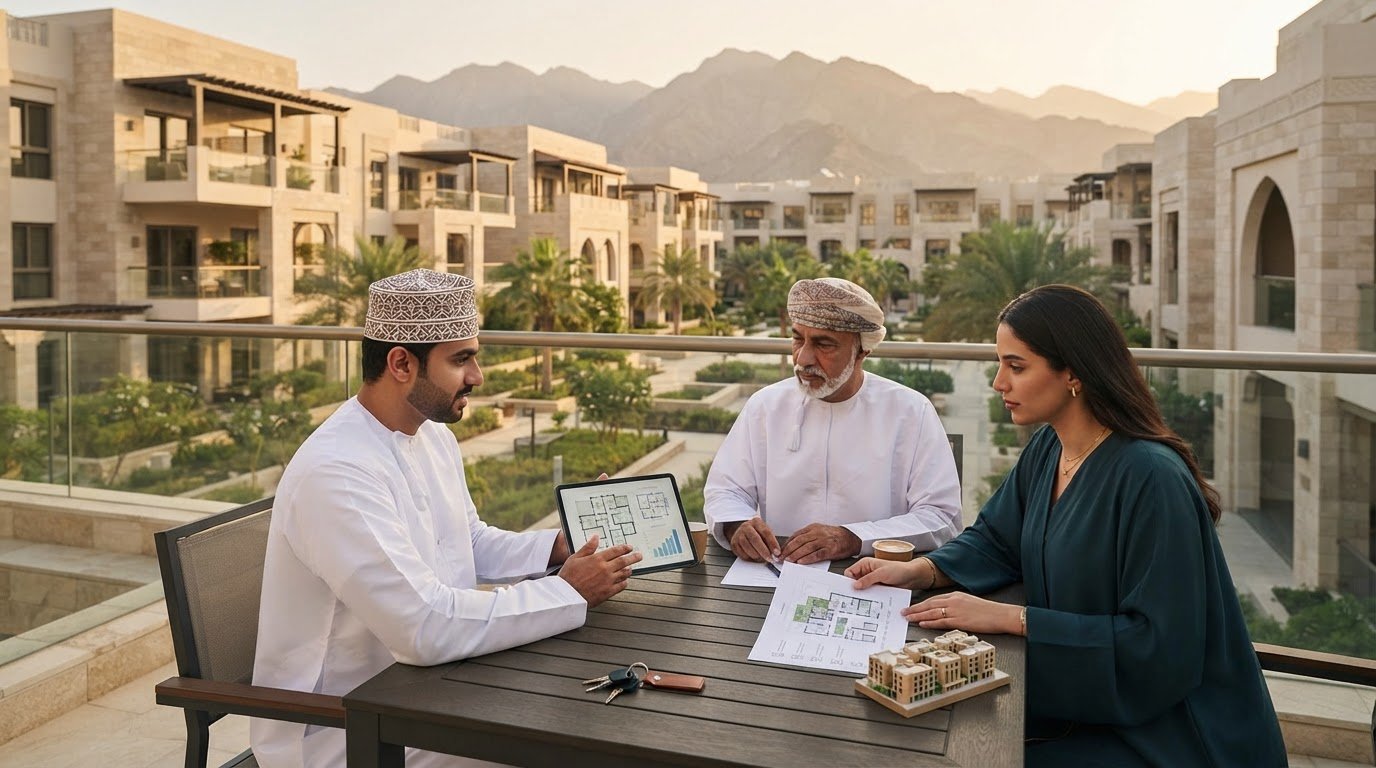
A shared property depends on organized finances, maintenance and communication. In Oman, owners association management coordinates these responsibilities through documented financial oversight, clear operational processes and consistent communication with residents and suppliers. A professional property management company owners can rely on can help bring these tasks into an orderly structure.
Owners need clear answers about who manages common areas, how service charges are administered and how maintenance issues are followed through. ARW Trading provides property management for owners and landlords, project marketing for developers, owners association management, digital board elections, facilities management and building maintenance, real estate brokerage, and property investment consultancy across Oman.
This article explains the manager’s role in shared-property governance, from budget preparation and service-charge administration to supplier coordination, maintenance oversight and resident communication. It also outlines practical ways an owners association can improve its records, reporting and day-to-day building operations.
Key Takeaways
- Distinguish owners association management for shared areas from individual rental property management to define responsibilities clearly.
- Review how budgets, service-charge records and arrears follow-up support transparent financial oversight.
- Use a clear maintenance process to track concerns from the initial report through supplier coordination and resident updates.
- A property management company Muscat owners engage for shared-property operations can help organize financial administration, maintenance oversight and resident communication.
- Use the practical checklist in this article to assess whether association records, communications and operational follow-up are well organized.
What owners association management means for shared property in Oman
Owners association management coordinates the administration and day-to-day operation of a shared property in Oman. It supports the owners’ collective oversight of common areas, shared costs, maintenance and resident communication. Its focus is the shared property, rather than the leasing of an individual owner’s unit.
These responsibilities are connected. Maintenance decisions affect operating costs, financial records help explain how shared funds are used, and clear communication helps residents understand what is being addressed. A structured process gives owners and association representatives a consistent view of issues, actions and follow-up. It also helps separate routine coordination from decisions that require direction or approval from the association or its board.
What does an owners association manager coordinate?
An association manager can coordinate administration and operations between owners, association representatives, residents and suppliers. For example, a report about a faulty light in a shared corridor can be recorded, assessed, referred to a supplier and tracked until the relevant parties receive an update. The manager keeps that process organized without obscuring who has authority to make a decision.
Coordination can bring financial administration, maintenance oversight and resident communication into one operating picture. If a proposed repair affects shared spending, the supporting information can be organized for review by the appropriate representatives. Owners can then understand the issue and the next steps without assuming the manager has authority to approve every expenditure or set association policy.
General management practices should not be presented as statutory duties. Verify statements about legal responsibilities, registration requirements or decision-making authority in Oman against current information from the Ministry of Housing and Urban Planning or an official government source such as Oman’s government portal. Operational arrangements can vary, while legal claims require authoritative support.
How association management differs from rental property management
Association management concerns shared-property administration. Its practical scope can include coordinating common-area upkeep, maintaining records of shared operational matters and communicating updates to residents. It serves the collective operation of the property, rather than the leasing interests of one landlord.
Rental property management, by contrast, focuses on an individual owner’s unit and landlord requirements. Depending on the arrangement, it can include finding a tenant and collecting rent. A landlord may use a property management company Muscat owners engage to manage rental responsibilities, while an owners association manager coordinates shared-property processes. The two roles can relate to the same building, but their responsibilities and records are different.
This distinction reflects the broader range of activities covered by Property Management, which can involve different property types and management needs. For owners, identifying whether an issue concerns a private unit or a shared area is a useful first step in directing it through the appropriate process.
How financial oversight and service charges support accountable management
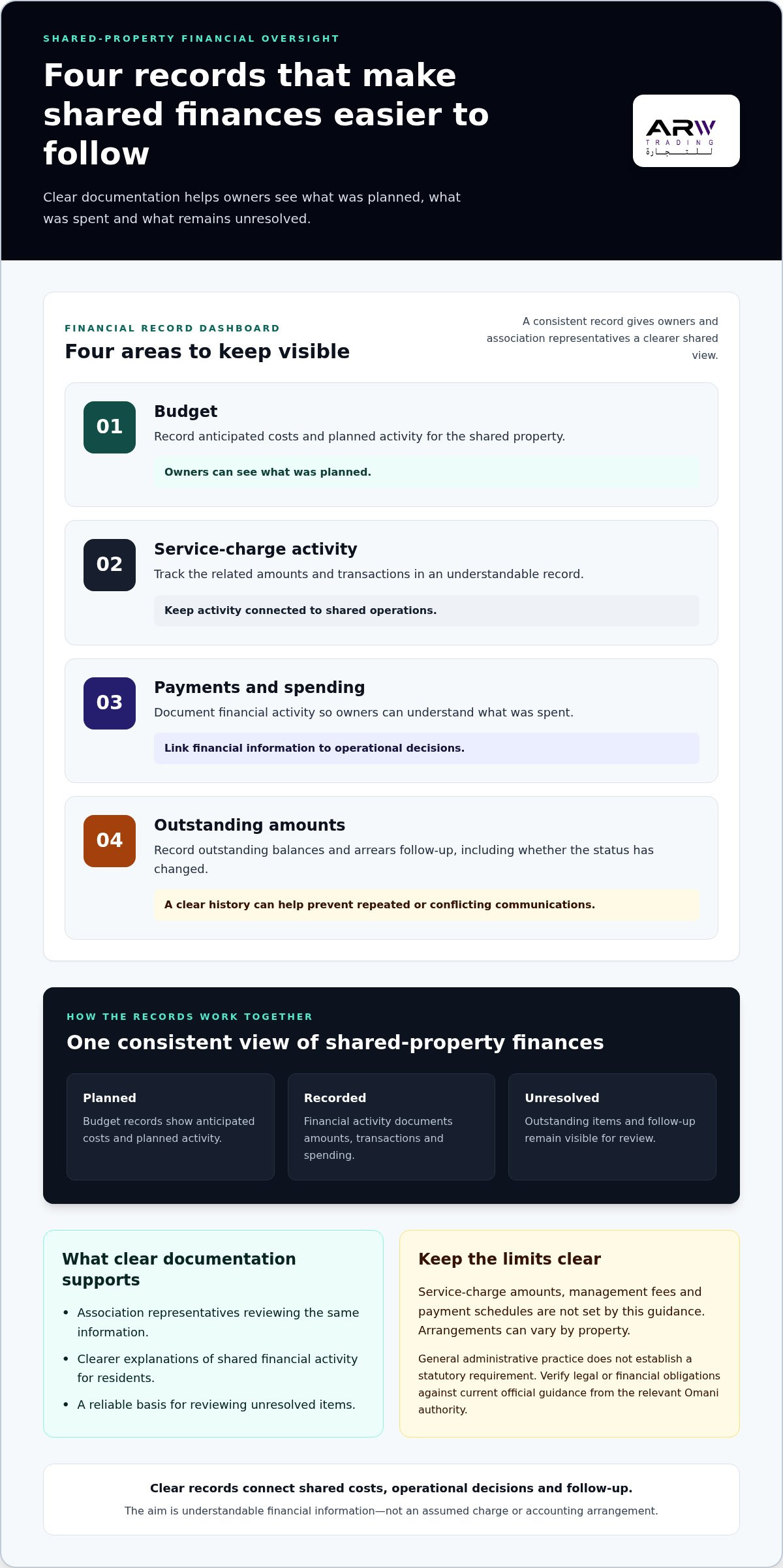
Transparent association financial oversight means keeping budgets, service-charge activity, payments and outstanding amounts documented in a way owners can understand. It connects financial records to operational decisions, so owners can see what was planned, what was spent and what remains unresolved.
For a shared property, a budget records anticipated costs and planned activity. Service-charge administration tracks related amounts and transactions, while arrears follow-up records outstanding balances and the steps taken to address them. These processes support continuity: association representatives can review the same information, and residents can receive clearer explanations of shared financial activity.
What should owners expect from association financial administration?
Owners should be able to follow a consistent record of the association’s financial administration. A useful system documents the budget, records service-charge activity and notes outstanding items, while showing how each item relates to shared operations. The aim is not to imply that every property uses the same charge or accounting arrangement, but to make the applicable records understandable.
Arrears follow-up should also be organized and recorded. A clear record can show that an amount remains outstanding, when follow-up occurred and whether the status has changed. Consistent documentation helps prevent repeated or conflicting communications and gives the appropriate association representatives a reliable basis for reviewing unresolved items.
This article does not set service-charge amounts, management fees or payment schedules. Those details should not be inferred from general guidance about association administration. Check legal reporting or financial obligations against current official guidance from the relevant Omani authority, including the Ministry of Housing and Urban Planning where applicable. General administrative practice alone does not establish a statutory requirement.
How to make financial information easier to follow
Clarity improves when records distinguish planned spending from recorded expenditure. For example, a budget may identify planned maintenance, while transaction records show payments made and items still awaiting resolution. A brief summary can connect the figures to the decisions or operational matters they relate to, while preserving access to the underlying records.
For an internal review, owners can check whether the financial information answers a few practical questions:
- Is the current budget documented and easy to distinguish from actual expenditure?
- Can service-charge activity and recorded payments be followed clearly?
- Are approvals and the reasons for financial decisions documented?
- Are outstanding amounts and follow-up actions shown with their current status?
These checks help identify gaps in records without assuming that an isolated delay or discrepancy proves misconduct. They also support more focused questions during association discussions. A property management company Muscat owners engage for shared-property administration can help organize budget preparation, service-charge records and arrears follow-up, while financial decisions remain subject to the association’s governance arrangements.
Keep underlying documents and concise summaries aligned. When an owner asks why a payment appears in the records, the relevant budget item, approval information and transaction entry should provide a traceable explanation. This is the practical value of financial oversight: decisions and activity become easier to review, communicate and follow up.
How maintenance, suppliers and resident communication work together
A shared-area maintenance concern is easier to manage when it follows a documented path: report the issue, assess its condition and impact, coordinate the appropriate supplier, then record progress and communicate an update. Owners and residents can see what is known, what action is underway and what remains open.
How maintenance issues can be tracked
Start with a clear record of the concern, such as a leak in a common corridor or a damaged entrance light. Note where it was reported, who is coordinating the next step and what assessment has been made. Prioritization should reflect the documented condition and likely impact, not an unrecorded assumption about urgency.
As work progresses, retain relevant supplier communications, status changes and available completion evidence. If an issue remains unresolved, record its current status and next action. This supports consistent follow-up and helps prevent conflicting explanations. These are practical process controls, not statements of statutory duties.
Why supplier coordination and resident updates matter
Supplier coordination works best when the reported issue and requested work are described clearly. A concise scope helps the supplier understand the concern, while a record of communications supports orderly follow-up. This section focuses on coordination and tracking, not procurement procedures or technical specifications.
Facilities management and building maintenance address the operational condition of shared spaces. Association management connects that work to wider property administration by organizing oversight and keeping relevant owners and residents informed. ARW Trading provides property management for owners and landlords, project marketing for developers, owners association management, digital board elections, facilities management and building maintenance, real estate brokerage, and property investment consultancy.
For example, if residents report a leak, an update can confirm that the concern has been recorded, an assessment is being coordinated and the status will be shared as information becomes available. It should not promise a response time or completion date unless that commitment is supported by the specific arrangement. Clear updates reduce uncertainty without overstating what is known.
The record can be organized around three simple questions:
| Responsibility | Example activity | Useful record |
|---|---|---|
| Issue tracking | Log a reported fault in a common area | Location, description, date reported and status |
| Supplier coordination | Share the issue and coordinate an assessment | Scope, correspondence and progress notes |
| Resident communication | Provide a concise status update | Update shared and any follow-up action |
| Completion follow-up | Record the reported work outcome | Completion note or available supporting evidence |
A property management company Muscat owners engage for shared-property operations can help coordinate maintenance oversight, suppliers and resident communication. For an overview of ARW Trading’s work, visit the ARW Trading website.
What owners can look for in a well-organized management process
An internal review helps owners assess whether association information is current, traceable and understandable. Its purpose is to identify process gaps, not to assume that an unclear record indicates misconduct. Start by locating current documents and identifying who maintains each category of information.
A simple review sequence for association processes
Review records in a consistent order: locate the documents, examine financial administration, then check how operational concerns and resident communications are tracked. This sequence can show whether information connects across routine work or is spread across separate records.
- Records: Can owners locate the current budget and relevant governance records, and identify who maintains them?
- Financial activity: Are planned spending, recorded expenditure, service-charge activity and outstanding items distinguishable?
- Maintenance: Can owners follow a reported issue through its recorded status and next action?
- Communication: Do updates make clear what is known and whether follow-up remains pending?
- Responsibilities: Is it clear which matters are being coordinated and which require a decision from association representatives?
If an answer is unclear, note the specific information gap and raise it through the association’s usual governance process. For example, if a maintenance concern appears in a message but not in the tracking record, clarify or update the record. This keeps the review focused on traceability rather than unsupported assumptions.
Governance records and decision traceability
Election records are another useful part of an association’s governance review. Eligibility verification, an audit trail and a certified election report help document the process and support traceability. Owners can consider whether the relevant records are accessible and organized without repeating the detailed election procedures themselves.
ARW Trading provides property management for owners and landlords, project marketing for developers, owners association management, digital board elections, facilities management and building maintenance, real estate brokerage, and property investment consultancy. This service range connects individual property needs with shared-property administration and related governance support.
A property management company Muscat owners engage for association administration can help maintain consistent records and operational coordination. To discuss the management scope for your association, read about owners association management at ARW Trading.
How ARW Trading supports owners associations across Oman
ARW Trading is a property management company serving owners and landlords in Oman. Its services include project marketing for developers, owners association management, digital board elections, facilities management and building maintenance, real estate brokerage, and property investment consultancy. For owners associations, its work brings financial administration, operational coordination and resident communication into an organized framework.
How ARW Trading organizes association administration
Financial administration covers budget preparation, service-charge management and arrears follow-up. These workstreams help keep financial activity organized and outstanding items visible for review. The objective is clear administration, not a fixed charge amount or a one-size-fits-all financial arrangement.
Operational coordination connects shared-property requirements with supplier communication and maintenance oversight. A reported issue can be recorded, referred for assessment and followed through with relevant updates. Keeping these activities organized gives association representatives a clearer view of current matters and supports continuity as tasks progress.
Resident communication is a distinct but connected workstream. Updates can relay relevant information about shared operations, maintenance status or administrative matters. Clear communication helps residents understand what has been reported and what is being coordinated, while records support consistent follow-up. These processes complement the association’s governance arrangements; operational administration does not replace decisions reserved for the association or its board.
ARW Trading provides owners association management across Oman. Its scope brings budgets, service charges, arrears follow-up, supplier coordination, maintenance oversight and resident communication into an organized administrative framework. Owners and association representatives can consider how these workstreams fit their property’s needs and existing governance processes.
Digital board elections are a related governance capability. The service verifies eligible owners and units, maintains an audit trail and provides a certified election report. It complements ongoing administrative and operational work without replacing it, giving associations a connected governance option alongside routine management processes.
As a property management company Muscat owners and landlords can engage, ARW Trading also serves the broader property sector in Oman. The focus here is association administration: coordinating financial and operational records, maintenance activity and resident-facing communication within the scope agreed for the property.
Article by Raheem Wyne
Last reviewed: October 18, 2026
Owners and association representatives can learn more about owners association management at ARW Trading.
Set a clear direction for your association
The next step is to turn an identified gap into a practical priority. Owners can agree which records, communication pathways or governance processes need clearer ownership, then establish a consistent way to review progress. This creates a constructive basis for discussion without assuming that an unclear process reflects wrongdoing.
For election governance, ARW Trading’s digital board election service verifies eligible owners and units, maintains an audit trail and issues a certified election report. This supports traceable decision-making as associations consider how to strengthen their governance arrangements.
ARW Trading provides property management for owners and landlords, project marketing for developers, owners association management, digital board elections, facilities management and building maintenance, real estate brokerage, and property investment consultancy. Owners and association representatives can discuss the management scope that fits their property.
Discuss owners association management with ARW Trading by calling +968 7927 4373 or +968 7927 4245, or emailing info@arwtrading.com. A clear starting point can help your association move forward with greater structure and confidence.
Frequently Asked Questions
What does owners association management include in Oman?
Owners association management in Oman coordinates administration for shared property, including financial records, maintenance coordination, supplier follow-up and resident communication. For example, a shared corridor repair belongs to common-property operations, while finding a tenant or collecting rent concerns an individual landlord’s unit. This distinction helps route each request through the appropriate process.
Who is responsible for managing an owners association?
Owners and association representatives make governance decisions, while a management company can provide administrative and operational support. For example, a manager may prepare information about a proposed repair for representatives to consider rather than approve it independently. The decision-making framework depends on the association’s arrangements; verify any claimed statutory responsibility against current official Oman guidance.
How are owners association service charges managed?
Service-charge administration can include budget preparation, recording charges and payments, and following up on arrears. These records help representatives distinguish planned spending from transactions already recorded. Fees vary by property and scope, request a quote. The applicable service-charge arrangement depends on the property and its association.
Can an owners association management company coordinate building maintenance?
Yes. A management company can record a maintenance request, coordinate supplier follow-up, track its status and share updates. For example, a report about a faulty shared entrance light can be logged with its location and current status. This process supports clear communication, but does not guarantee a particular response time or repair outcome.
What records should an owners association keep?
Useful records include financial documents, maintenance logs, supplier communications and governance records. Together, they help representatives trace what was reported, considered and followed up. For example, a supplier note can be linked to the related maintenance item. Check whether particular records are legally required against current official Oman guidance, such as the government portal.
About the author
Raheem Wyne. Raheem Wyne works at ARW Trading, a real estate and property management company in Muscat, Oman. He works with owners' associations, landlords, developers and property investors on owners association management, property and facilities management, brokerage, off-plan sales and marketing, and digital board elections. His articles share practical guidance for property owners and investors in Oman. Raheem Wyne on LinkedIn